TANGO TIPS – 12 October 2025
The following is a copy of the notes provided to participants at a “Tango Tips” musicality interlude at the Toca Tango Practilonga in Auckland.
Transitions in tango music invite transitions in our tango dancing.
There are many musical choices to be made during every tango dance; two of which I want to deal with.
The tango I have chosen is the 1935 Francisco Canaro / Roberto Maida version of “Poema”, chosen because of its clear music transitions.
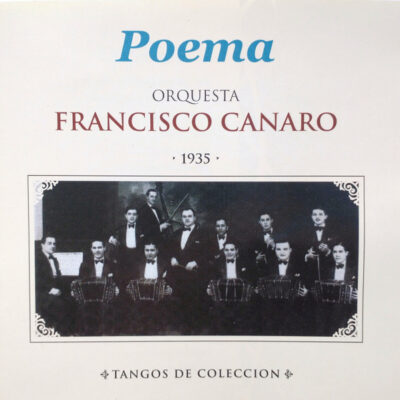
I would like everyone to dance as simply as you can to “Poema”, then transition to different dance steps for every subsequent section or phrase for which the music is significantly (or subtly) different.
In particular I would like you to try:
1. doubling or halving the timing of your steps if there is a doubling or halving of the pulse of the music; and
2. taking smaller steps if you choose to make faster double-time steps, and longer steps if you choose to make slower “half-time” steps.
Among the many musical choices TO ALIGN OUR STEPPING TO” are:
• the compas
• double the compas
• half the compas
• a particular underlying rhythm (e.g. habanera, off beat, etc)
• the rhythm of the melody
• the rhythm of a counter-melody
• the rhythm of selected phrases (including phrase endings)
• the syncopations
• the pauses
The pre-eminence of each will often change throughout the tango
Among the “HOW TO STEP” choices are:
• direction of step
• straightness of circularity of step
• length of step
• strength of step
• smoothness or crispness of step
• balked or secret or double step (e.g. as needed to change between parallel and cross system)
Among the “WHEN TO STEP” choices are:
• start or end of the tango
• start of an anacrusis
• start or end of a music section
• start or end of a phrase
• the point of any other musical transition (e.g. vocal to instrumental, phrase to phrase, Q & A)
Importance of communicating intention to make each upcoming change.
Stu 12 October 2025